When a Prank Turns into a Murder Charge: The Houston Ding-Dong-Ditch Shooting
- Originally published:
- September 3, 2025
By Jeffrey S. Straub · 5 min read
When a Prank Turns into a Murder Charge: The Houston Ding-Dong-Ditch Shooting
By Jeffrey Straub
Sponsored by 2A Self-Defense Law
⸻
Over Labor Day weekend in Houston, a group of kids were doing something almost every generation has done at some point: ding-dong-ditch. Ring a doorbell, run away laughing, and hope the homeowner doesn’t catch you. It’s childish, it’s annoying, but it isn’t deadly.
Except this time, it was.
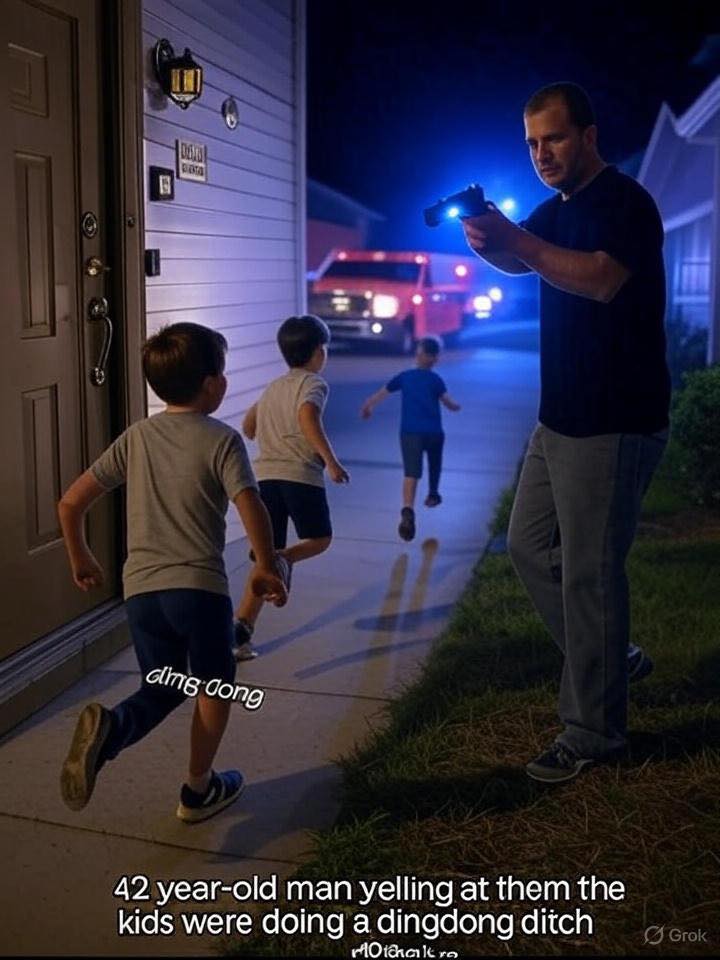
According to police and witnesses, 11-year-old Julian Guzman rang a doorbell on Mimbrough Street just before 11 p.m. and sprinted off with his friends. Inside that house was 42-year-old Gonzalo Leon Jr. Instead of ignoring the prank, yelling out the window, or calling the cops, Leon ran outside with a handgun and fired. Julian was hit in the back as he ran down the street. He collapsed a block away and later died in the hospital.
Detectives didn’t mince words. This wasn’t self-defense. There was no break-in. No weapon. No threat of death or serious injury. The boy was running away. Leon was charged with murder on September 2, 2025, and booked into Harris County Jail. He faces the possibility of a severe prison sentence if convicted. As of that date, court records did not list a defense attorney, and Leon has made no public statement.
This case is getting national attention, not just because of the victim’s age, but because it forces us to talk about where self-defense law begins and where it ends.
Texas is known for having some of the strongest protections for gun owners in the country. Castle doctrine. Stand-your-ground. No duty to retreat. On paper, it looks like you’re bulletproof if you’re defending yourself on your property. But the law still has guardrails, and Leon blew right past them.
Under Texas Penal Code, deadly force is only justified if you reasonably believe it’s immediately necessary to stop an imminent threat of death, serious bodily harm, or certain violent felonies.
Here’s where people often get confused: the castle doctrine doesn’t mean you can shoot anyone on your property. What it really gives you is an extra presumption. If someone is unlawfully and forcefully trying to enter your home, car, or place of business, the law presumes you acted reasonably if you use deadly force. That presumption is huge, because it flips the starting point in your favor.
But if there’s no forced entry, you don’t lose your right to self-defense — you just lose the presumption. You’re back to proving imminence, proportionality, and reasonableness like in any other self-defense case.
And here’s the kicker: there isn’t one castle doctrine in America. There are fifty. Each state has built its own version over time, shaped by local politics, culture, and court rulings. Some states limit it to your home. Others extend it to vehicles, workplaces, or even hotel rooms. Some make retreat irrelevant, others don’t. What you think “castle doctrine” means depends entirely on where you live.
That’s why you can’t just take a buddy’s word at the range or repeat something you heard on YouTube. “Castle doctrine means you can shoot anyone who comes on your property” is flat-out wrong in almost every state. The castle exists, but the walls aren’t the same everywhere.
So how does this look in front of a Texas jury?
• Imminence? Gone—the boy was already fleeing.
• Proportionality? Gone—deadly force against a prank doesn’t match.
• Reasonableness? Gone—a reasonable person wouldn’t see a child running away as life-threatening.
• Castle doctrine presumption? Doesn’t apply—no forced entry.
• Stand-your-ground? Doesn’t allow you to create the confrontation in the first place.
The evidence lines up the same way. Witnesses confirmed Leon fired while the children were running away. Police emphasized the shots were taken “far from the house.” A search of the home turned up multiple firearms, but nothing that changes the core fact: kids were outside ringing a doorbell.
This isn’t a gray-area case. It’s a case about anger, poor judgment, and the misuse of self-defense law.
And here’s the thing—this isn’t the first time we’ve seen something like this.
In North Carolina, 2023, Robert Louis Singletary shot at neighbors after a basketball rolled into his yard, hitting a six-year-old girl and her parents. He claimed fear, but prosecutors charged him with attempted murder, arguing the response was wildly disproportionate. That case is still pending.
In California, 2020, a man named Anurag Chandra chased and rammed a car full of teens who had ding-dong-ditched his house. Three boys were killed. In 2023, he was convicted of murder and sentenced to life without parole.
Different states. Different facts. But the theme is the same: juries and prosecutors aren’t fooled when “self-defense” is used to excuse overreactions to minor provocations.
This is also where we need to zoom out. Yes, kids need to know that pranks can be dangerous in today’s climate. Social media has revived ding-dong-ditch as a TikTok trend, but not every homeowner reacts with patience. Parents should absolutely be warning their kids that what seems funny could turn tragic.
But the burden doesn’t vanish for gun owners. If you choose to own and carry, you take on the responsibility of knowing the law and controlling your emotions. That responsibility is heavier, not lighter, in a state like Texas where the law gives you broad protections. You have to know the boundaries, because if you don’t, the law will hold you accountable after the fact.
Here’s what every gun owner should take away: being legally armed doesn’t mean you’re legally justified. You can have a gun on your hip, be standing in your own yard, and still be absolutely in the wrong. Self-defense law exists to save lives, not to excuse poor judgment.
For instructors, this case is a teaching gift. It’s emotional, it’s clear, and it demonstrates the limits of self-defense law better than a dry statute ever could. For concealed carriers, it’s a gut check. If you had to explain your decision to twelve strangers tomorrow, would they see you as reasonable? Would they believe your life was in danger? If not, the law isn’t on your side.
An 11-year-old boy is gone because a man didn’t ask those questions. Now the boy’s family faces a lifetime of grief, and Leon faces the possibility of decades—or life—behind bars. All because someone confused irritation with danger.
Being armed means being accountable. That’s the real lesson here.
—
Sponsored by 2A Self-Defense Law
We don’t avoid nuance—we weaponize it.
#SelfDefenseLaw #CastleDoctrine #StandYourGround #TexasLaw #2ASelfDefense #ReasonablenessMatters
ImminenceProportionalityReasonablenessNational Cases and Constitutional Issues
Related articles
National Cases and Constitutional Issues
The First Shot, the Second Shot, and Everything She Did Afterward
October 16, 2026 · 6 min read
National Cases and Constitutional Issues
He Got Out of the Fight. Then He Got a Rifle. Was He Still Acting in Self-Defense?
September 26, 2026 · 10 min read
National Cases and Constitutional Issues
SHE SHOT HER HUSBAND THROUGH A PILLOW. MURDER, RIGHT?
September 19, 2026 · 6 min read