The First Shot, the Second Shot, and Everything She Did Afterward
- Originally published:
- October 16, 2026
By Jeffrey S. Straub · 6 min read
The First Shot, the Second Shot, and Everything She Did Afterward
By Jeffrey S. Straub | 2A Self-Defense Law
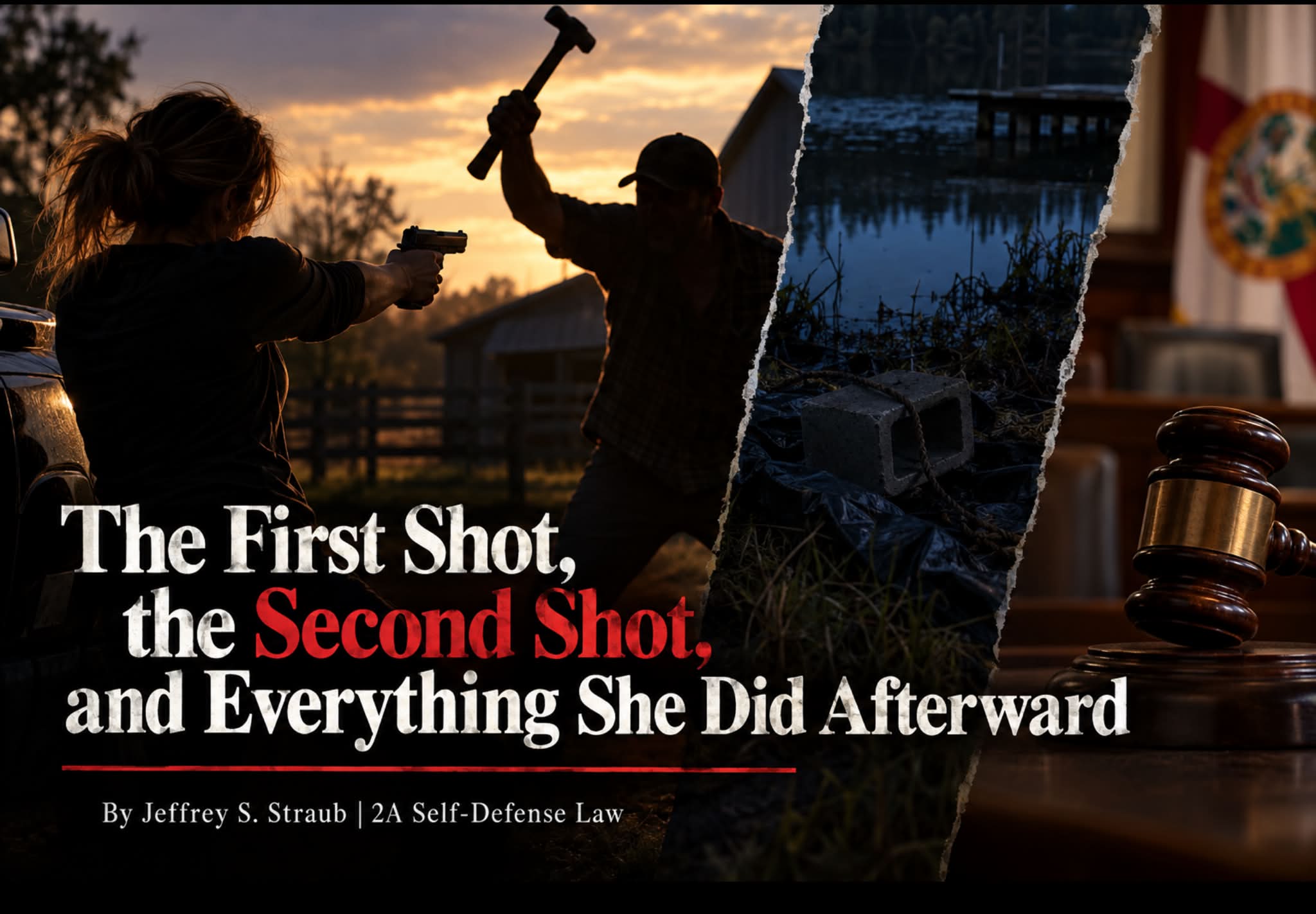
On September 9, 2024, Caylen Suvanna Deller shot her former boyfriend, Chad Mullen, twice at her horse farm in Putnam County, Florida. She claimed she acted in self-defense after Mullen choked her and advanced toward her swinging a hammer. If her account was accurate, she may have had a legitimate reason to use deadly force. But what happened between those two gunshots, and everything she did afterward, created serious questions about whether the shooting was justified.
On October 15, 2026, a Florida jury convicted Deller of first-degree murder, tampering with physical evidence, and failure to report a death. She received life imprisonment without parole. The jury deliberated for approximately one hour, although the speed of its decision tells us little about which evidence jurors considered most persuasive.
This case presents three separate legal questions: Was the first shot justified? Was the second shot justified? And what can Deller’s subsequent conduct tell us about her intentions when she pulled the trigger?
According to Deller’s testimony, Mullen had previously broken into her apartment, prompting her to acquire a firearm for protection. On the evening of the shooting, she picked him up because his vehicle had broken down and brought him to her horse farm, where he repaired a headlight on her truck.
Deller testified that she then confronted Mullen about allegations that he had sexually abused her young daughter. She claimed he became enraged, pinned her against the truck, and choked her until she could not breathe. She managed to retrieve a handgun from beneath the driver’s seat, causing him to back away. According to her testimony, Mullen then grabbed a hammer from a nearby barn rail and advanced toward her while swinging it. She fired twice.
Florida Statute § 776.012 permits deadly force when a person reasonably believes it necessary to prevent imminent death, great bodily harm, or the imminent commission of a forcible felony. A qualifying person lawfully present and not engaged in criminal activity generally has no duty to retreat.
Being strangled and subsequently threatened with a hammer could certainly create circumstances justifying deadly force. However, the legal question is not simply whether Deller was afraid. Her belief must also have been reasonable under the circumstances.
Prosecutors challenged her account, presenting evidence that she had called Mullen approximately 28 times during the week preceding his death. They argued that she deliberately arranged the encounter and that her behavior was inconsistent with her claimed fear of him.
But arranging a meeting or confronting someone about alleged misconduct does not automatically make a person the initial aggressor. Florida Statute § 776.041 limits justification in specified circumstances involving provocation or criminal conduct. An accusatory conversation alone does not necessarily satisfy those requirements. If Mullen initiated an unlawful physical attack, Deller could potentially retain the right to defend herself.
The more troubling question involves the second gunshot.
Kenneth Wadell, the father of Deller’s daughter, reportedly testified that Deller had described her handgun malfunctioning after the first shot. According to his account, she cleared the malfunction before firing again. Some reporting describes a substantial interval between the shots, although the precise duration and Mullen’s condition during that interval require confirmation from the trial record.
Deller denied the malfunction, testifying that she did not know how to clear a jam and that the firearm discharged twice when she pulled the trigger.
That contradiction matters enormously.
Self-defense is not an unlimited authorization to continue using deadly force simply because an attacker initially presented a legitimate threat. The justification must continue to exist when additional force is used. If the first shot stopped Mullen’s attack and he no longer presented an imminent threat, a deliberate second shot could have been unlawful.
Conversely, a malfunction does not automatically terminate an attack. A wounded person armed with a hammer can remain dangerous. Even a significant pause between shots does not necessarily eliminate the justification if the threat continues.
The critical question is what Mullen was doing when Deller fired the second shot. The publicly reported evidence does not establish that sequence with certainty.
This distinction also matters for premeditation.
Under Florida Statute § 782.04, premeditated first-degree murder requires a conscious decision to kill formed before the fatal act. That decision need not exist hours beforehand. It can develop during an encounter, provided there is sufficient opportunity for reflection.
Consequently, prosecutors did not necessarily have to establish that Deller arrived at the farm intending to murder Mullen. If the jury believed she deliberately fired a second, unjustified shot after an opportunity to reflect, that evidence could support a premeditation theory, depending on the circumstances and causation evidence.
But the disputed shooting was only part of the prosecution’s case.
Deller did not call 911 or summon medical assistance. Instead, she contacted her friend, Tina Marie Lee-Ellis, and returned to the property. According to trial testimony, Mullen’s body was moved into a pond and weighted with a cinder block. When it resurfaced approximately two days later, it was transported to another property and buried in a shallow grave.
Deller admitted destroying Mullen’s cellphone and repeatedly misleading people about his whereabouts. His body was not discovered until October 28, nearly seven weeks after the shooting.
Deller attributed important concealment decisions to Lee-Ellis, claiming her friend persuaded her that police would not believe a self-defense explanation. However, that was Deller’s account, not an established fact. Lee-Ellis was separately charged, pleaded not guilty, and her alleged involvement remained disputed.
The prosecution argued that these actions demonstrated consciousness of guilt. In criminal proceedings, efforts to conceal evidence, mislead investigators, or prevent discovery may provide circumstantial evidence that someone believed they had committed a crime.
But consciousness of guilt is not the same thing as proof of guilt. Someone might panic after a legally justified shooting, fear prosecution, or make irrational decisions. Those explanations do not excuse separate crimes, but they illustrate why concealment alone cannot establish that the original use of force was unlawful.
Likewise, conduct occurring afterward cannot retroactively create premeditation. If a shooting was justified when it occurred, subsequent evidence destruction does not transform that lawful act into murder.
Nevertheless, those actions can affect how jurors evaluate competing accounts of the original encounter. A defendant who repeatedly lies about a death may struggle to persuade jurors that her later explanation of the shooting is truthful.
That is where the disputed second shot and the concealment become interconnected. The alleged malfunction concerned whether deadly force remained necessary and whether a deliberate decision to kill developed. The subsequent concealment concerned Deller’s credibility and possible consciousness of guilt. Together, they presented prosecutors with two distinct but potentially reinforcing arguments.
We cannot determine from the available reporting which argument ultimately persuaded the jury. Nor can we independently reconstruct the precise sequence of the gunshots without the complete forensic evidence and trial record.
For responsible armed citizens, however, the lessons are substantial.
Deadly force must remain justified when it is used. Each additional shot can be examined in light of changing circumstances. After a defensive shooting, preserve the scene, request emergency assistance when safe, contact law enforcement, and obtain legal counsel. Exercising constitutional rights is not the same as destroying evidence or concealing a death.
The Deller case demonstrates why legal justification and the ability to establish that justification through credible evidence are different matters. A person may have faced a genuine threat, yet subsequent dishonesty can severely undermine the evidence supporting that claim.
A justified shooting does not become murder because of what happens afterward. But what happens afterward can profoundly influence whether a jury believes the shooting was justified at all.
That distinction is worth understanding long before anyone faces the terrifying possibility of using deadly force in self-defense.
National Cases and Constitutional Issues
Related articles
National Cases and Constitutional Issues
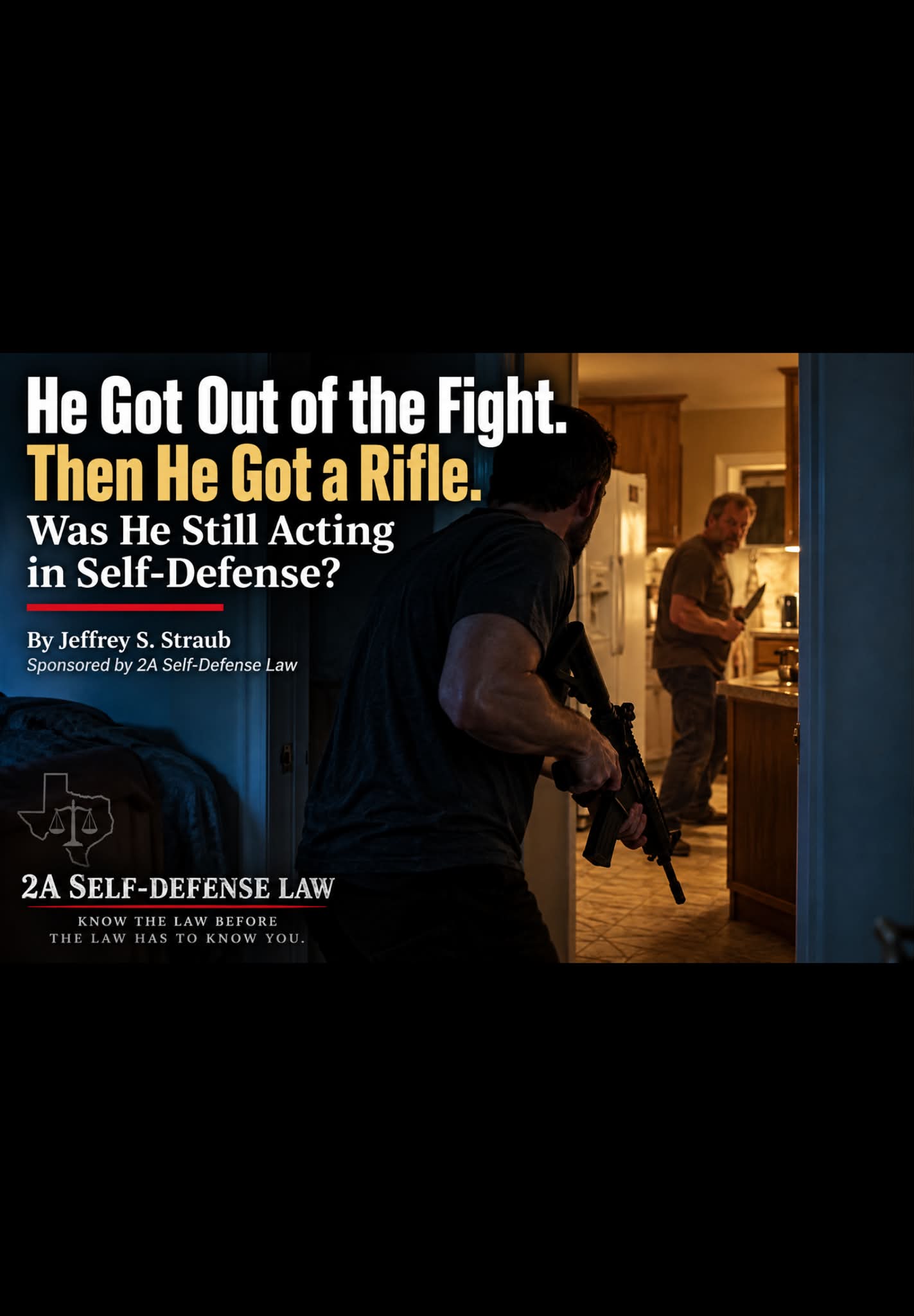
He Got Out of the Fight. Then He Got a Rifle. Was He Still Acting in Self-Defense?
September 26, 2026 · 10 min read
National Cases and Constitutional Issues
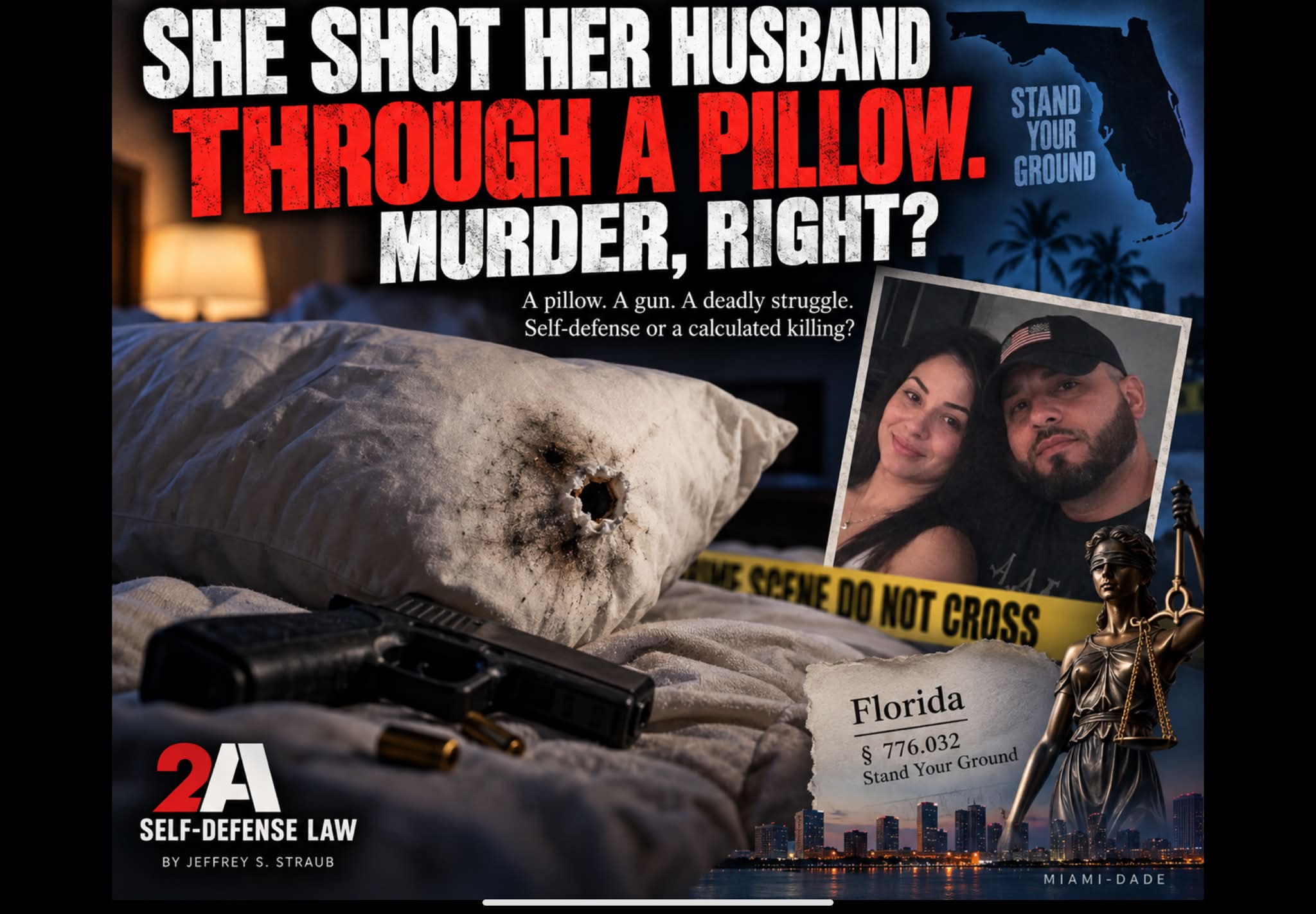
SHE SHOT HER HUSBAND THROUGH A PILLOW. MURDER, RIGHT?
September 19, 2026 · 6 min read
National Cases and Constitutional Issues
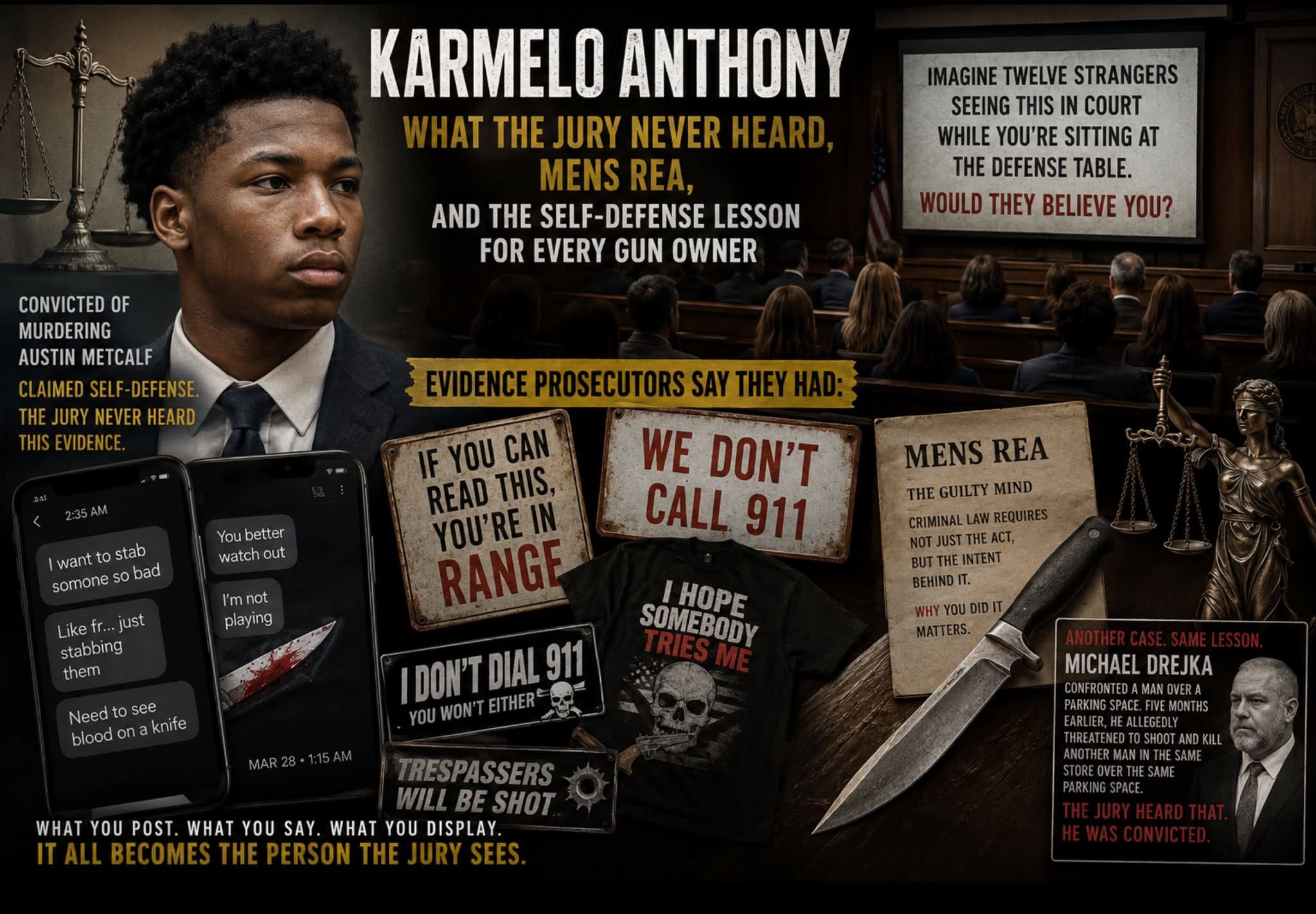
KARMELO ANTHONY: WHAT THE JURY NEVER HEARD, MENS REA, AND THE SELF-DEFENSE LESSON FOR EVERY GUN OWNER
August 22, 2026 · 8 min read