The Danger of Thinking You Know the Law
- Originally published:
- June 20, 2025
By Jeffrey S. Straub · 2 min read · Minnesota
Sponsored by: 2A Self-Defense Law Because if you’re wrong about the law, the court won’t care how confident you were
Let me tell you how easy it is to screw this up.
I read an article that sounded airtight. It claimed Minnesota passed a new self-defense law in 2025. Expanded Castle Doctrine. No duty to retreat in your car. Burden of proof shifted to the prosecution by statute. Basically, it said the law now protects good people even more. Sounds great.
Just one problem: none of it passed.
The bills failed. Some died quietly in committee. One lost by a single vote. And now the kicker? I had to unlearn something I never should’ve picked up in the first place.
That’s the danger. Not being ignorant thinking you know.
“The hardest part of getting older isn’t learning new things. It’s learning what to forget and forgetting what you used to know.”
“The greatest obstacle to discovery is not ignorance. It’s the illusion of knowledge.”
That illusion can cost you everything.
And this isn’t just about people with guns. It’s about anyone who uses force. Martial artists. Security guards. Regular folks who throw a punch at the wrong time. If you act based on something you thought passed—because it “sounded right” you’re still going to jail when the law disagrees.
This is why I always tell people: knowing the law isn’t just about memorizing statutes. It’s about knowing what’s actually enforceable versus what someone told you passed.
But even deeper than that? You have to live it.
This stuff isn’t just head knowledge. It’s behavioral. That’s why I train people to internalize what I call the Five Pillars of Self-Defense:
Innocence, Imminence, Proportionality, Avoidance, and Reasonableness.
These aren’t legal trivia they’re your lifeline.
If you live those if you breathe them into every reaction, every decision, every training scenario you won’t need to guess in the heat of the moment. You’ll already be walking the path the law requires.
And it all boils down to what I call the Core Sentence:
“A person who is without fault may use force, including deadly force, to defend against what they reasonably fear is an imminent unlawful threat of death or great bodily harm provided there’s no alterer [reasonable] way to avoid it.”
If you live that, you won’t need a statute update to stay out of court. You’ll already be aligned with how the law works whether it changes or not.
So stop pretending that knowing the name of a bill makes you legally bulletproof. Stop thinking that because some guy said it in a video, it must be true. And stop gambling your life on half-truths, YouTube summaries, or feel-good myths about the law protecting you just because you “meant well.”
The court doesn’t care what you meant.
It cares what you did and whether it matched what the law requires.
Jeffrey Straub
2A Self-Defense Law
“We take the fear out of getting it wrong.”
InnocenceImminenceProportionalityAvoidanceReasonablenessMinnesota Case Analysis and Use-of-Force Law
Related articles
Minnesota Case Analysis and Use-of-Force Law
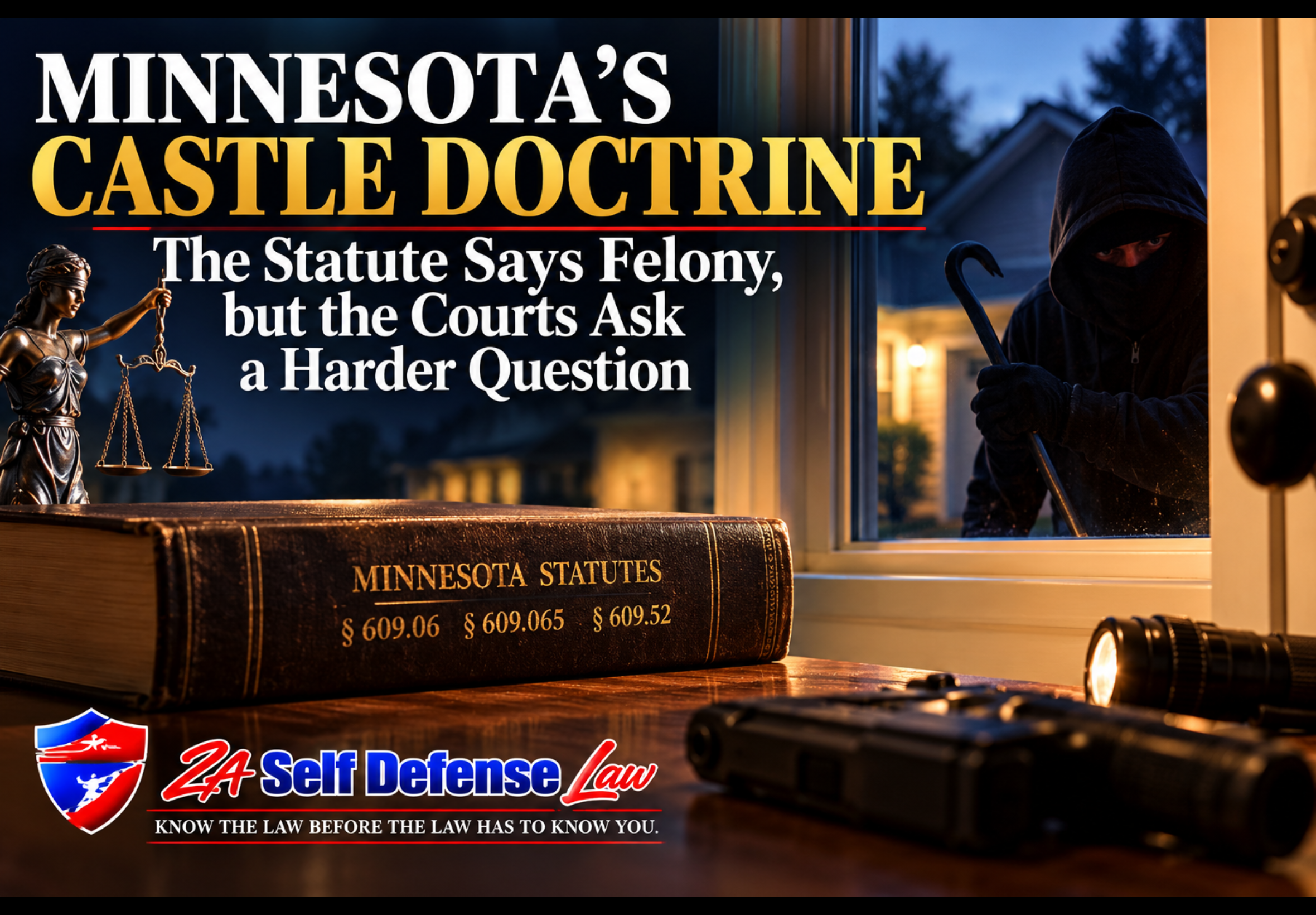
Minnesota's Castle Doctrine: The Statute Says Felony, but the Courts Ask a Harder Question
Minnesota law permits deadly force to prevent certain felonies in the home, but that does not make every felony a license to kill. Learn how the courts interpret necessity, reasonableness, retreat, and the rights of co-residents.
October 20, 2026 · 9 min read
Minnesota Case Analysis and Use-of-Force Law
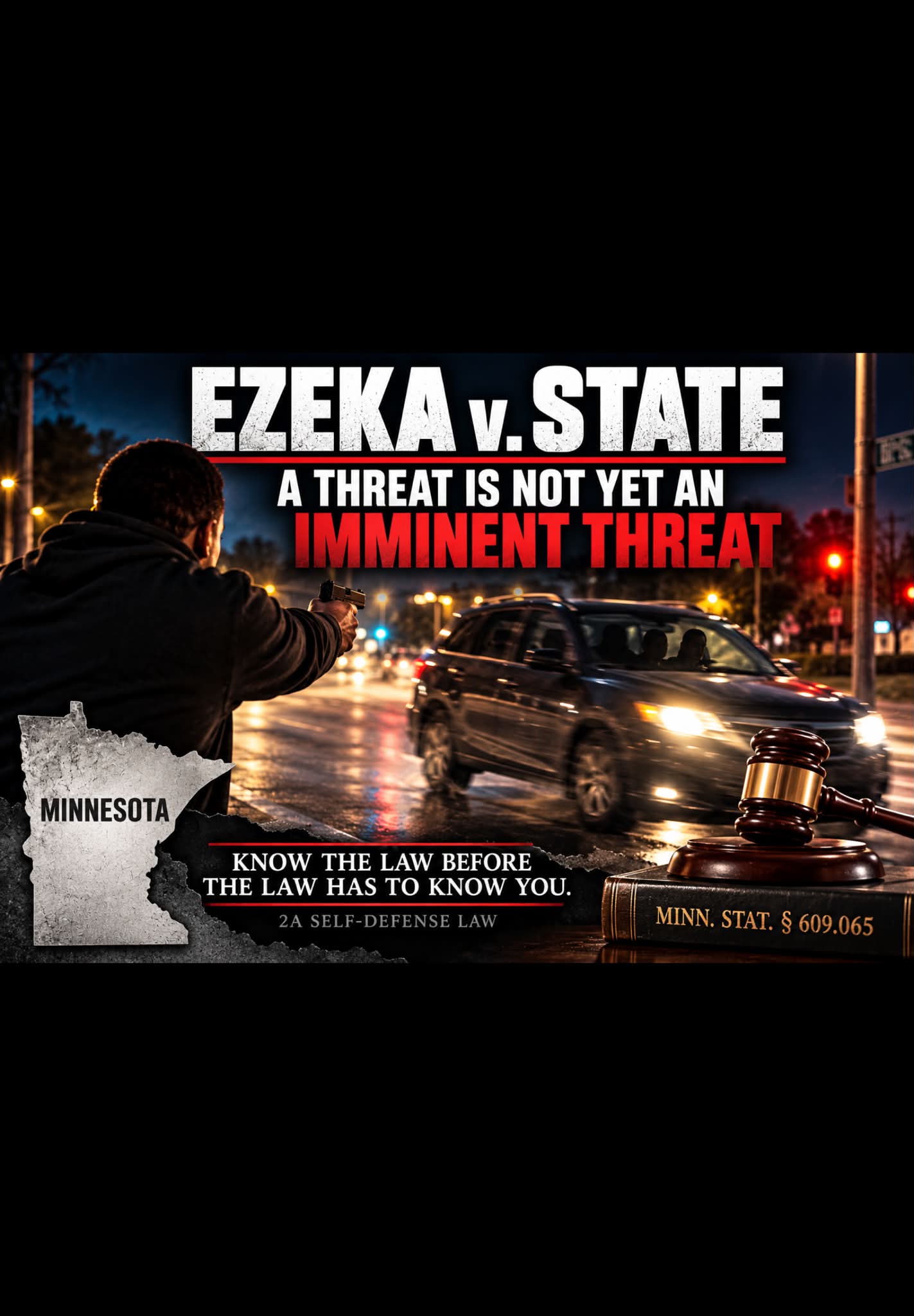
EZEKA v. STATE: A THREAT IS NOT YET AN IMMINENT THREAT
September 30, 2026 · 3 min read
Minnesota Case Analysis and Use-of-Force Law
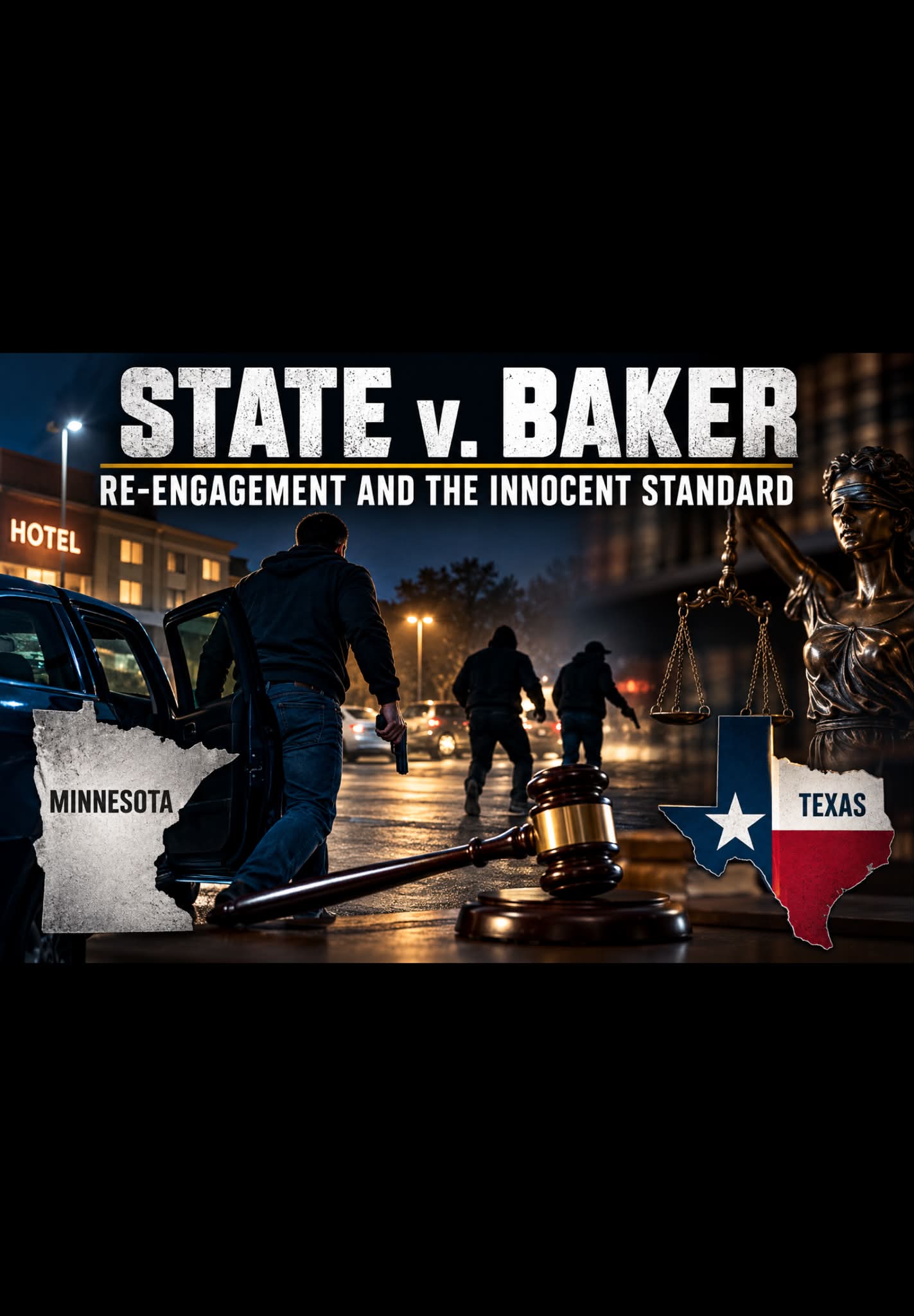
STATE v. BAKER: RE-ENGAGEMENT AND THE INNOCENT STANDARD
September 29, 2026 · 7 min read