
Minnesota’s Self-Defense Law Needs Clarity—Not Confusion
- Originally published:
- April 4, 2025
By Jeffrey S. Straub · 5 min read · Minnesota
Minnesota’s Self-Defense Law Needs Clarity—Not Confusion
By Jeffrey Straub
The Minnesota Legislature has once again failed to pass a stand-your-ground law—something that 35 other states have already implemented in some form, either through legislation or judicial precedent. This legislative inaction leaves Minnesota among the minority of states that still impose a duty to retreat in public spaces before using deadly force in self-defense, provided retreat can be done safely. The interpretation of "safely" is often ambiguous, leading to uncertainty in courtrooms across Minnesota.
Unlike stand-your-ground jurisdictions that remove the requirement to retreat under certain conditions, Minnesota leaves it to the finder of fact—whether a jury or a judge in a bench trial—to decide whether a person could have safely escaped. And here’s the problem: the law doesn’t require your decision to be perfect—it requires it to be reasonable. But that standard of reasonableness is judged by twelve people who have likely never experienced a split-second use-of-force event in their lives, sitting in a quiet, air-conditioned courtroom guarded by county sheriffs. The same goes for the judge. The court may be thoughtful and well-versed in the law, but chances are, the person making that decision has never had to choose between fight or flight in a truly dangerous moment. The law asks you to act reasonably under extreme stress—and then hands that decision over to people who’ve never been there.
Minnesota's hesitancy to provide clarity, either legislatively or judicially, exacerbates the issue. In State v. Blevins, the court reaffirmed that a person has a duty to retreat when reasonably possible before using force in self-defense outside the home. After being threatened with a knife, Blevins pulled out a machete and began waving it defensively. The court concluded that, based on its interpretation of the events, Blevins’s actions in continuing to wave the machete were not justified because he had a reasonable opportunity to retreat and failed to do so.
But this kind of reasoning is deeply problematic for law-abiding citizens who want to understand how the law applies in real time and do the right thing. The court’s decision places enormous weight on a split-second judgment call and assumes the defender could have safely escaped—without offering any concrete proof that retreat was possible. In contrast, states like Arizona have adopted statutes that explicitly allow for the defensive display of a firearm when a person is threatened with deadly force. In Arizona, the law recognizes that pulling a weapon in response to a deadly threat—without firing it—can be a lawful and reasonable act of self-defense. Yet in Minnesota, Blevins’s defensive display of a machete after being threatened with a knife was criminalized.
This effectively demands that self-defenders prove a negative: that no safe option to flee existed. That’s not just legally vague—it’s paralyzing. In the real world, hesitation can get you hurt or killed. The court may have been well-intentioned, but rulings like this generate mixed signals that make it harder—not easier—for good people to follow the law.
The implications of the Blevins case are particularly concerning given the defendant's background. Blevins was not a model citizen; his actions during the incident were questionable. However, the Minnesota Supreme Court's decision in this case sets a precedent that affects all citizens, not just those with checkered pasts. By extending the duty to retreat to situations involving the mere threat of force with a deadly weapon, the court has placed an additional burden on individuals who may need to defend themselves in dangerous situations. This ruling underscores the need for legislative clarity to ensure that law-abiding citizens are not unduly penalized when acting in self-defense.
Furthermore, Minnesota does not recognize the doctrine of imperfect self-defense as a complete defense. In State v. Basting, the Minnesota Supreme Court held that imperfect self-defense—where an individual has an actual but unreasonable belief in the necessity of using deadly force—does not exonerate the defendant but may serve as a mitigating factor, potentially reducing a murder charge to manslaughter. This approach acknowledges that while the defendant's belief was genuine, it was not objectively reasonable, thus warranting a lesser degree of culpability.
Minnesota has an opportunity to be a pioneer by extending the concept of imperfect self-defense to address the duty to retreat. By legislating that an individual's unreasonable belief about the necessity to retreat could serve as a mitigating factor, the state would provide a more nuanced framework for self-defense claims. This would allow courts to consider the complexities individuals face in high-stress situations, balancing accountability with an understanding of human behavior under duress.
Yet it’s important to recognize that not all stand-your-ground laws are the same. Some are rigid, while others—such as Pennsylvania’s—impose added conditions, like requiring the attacker to be armed with a deadly weapon. Florida’s version requires only that the defender be in a place they have a legal right to be and not engaged in a criminal act. These kinds of measured safeguards could serve as a model for Minnesota.
What’s needed is predictability—a law that protects responsible citizens while preserving necessary guardrails. Lawmakers should consider reforms that simplify the legal test without encouraging recklessness. This could involve codifying an objective standard for when retreat is required or adopting a "soft" Stand Your Ground provision. In such jurisdictions, individuals may use force without a duty to retreat if they reasonably believe it necessary to prevent imminent death or great bodily harm. However, the finder of fact—whether in a jury or bench trial—retains the authority to assess whether the individual's belief and actions were objectively reasonable. If the finder of fact determines that the actions were significantly beyond what a reasonable person would do in similar circumstances, the individual may lose the protection of the Stand Your Ground defense and face conviction. This framework ensures that the application of self-defense claims remains subject to careful judicial scrutiny.
By examining these models and considering innovative approaches—such as integrating imperfect self-defense, adopting additional requirements like those in Florida and Pennsylvania, and implementing a "soft" Stand Your Ground provision that allows the finder of fact in a jury or bench trial to assess the reasonableness of the defender's belief and actions—Minnesota can craft a balanced approach that clarifies self-defense laws. This would ensure that citizens understand their rights and responsibilities while maintaining public safety.
It’s time for Minnesota to stop dodging this issue and start crafting a solution that acknowledges both the rights and responsibilities of the law-abiding citizen who wants to do the correct thing. Clarity shouldn’t be controversial. In the realm of self-defense law, it could be life-saving.
ReasonablenessMinnesota Case Analysis and Use-of-Force Law
Related articles
Minnesota Case Analysis and Use-of-Force Law
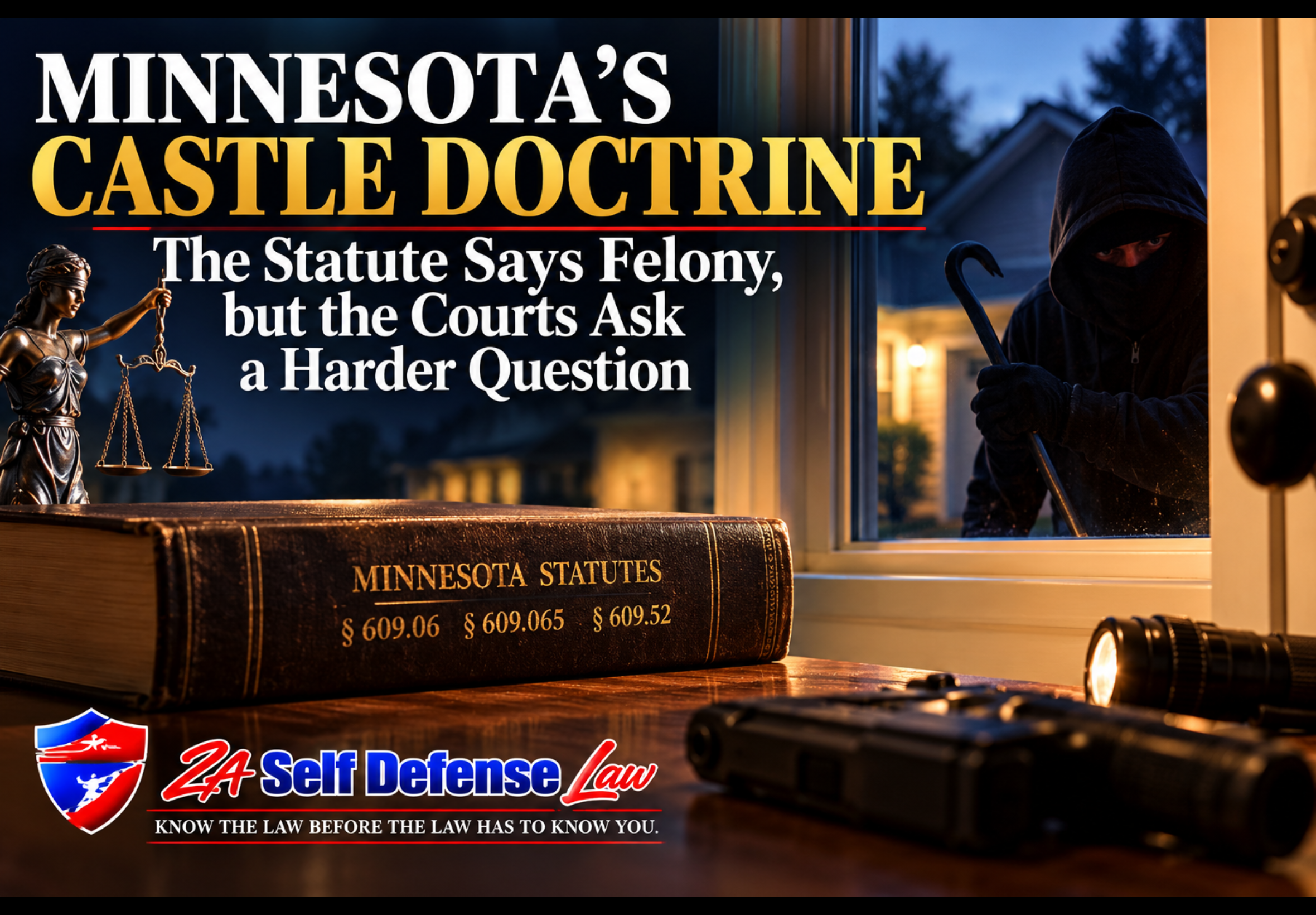
Minnesota's Castle Doctrine: The Statute Says Felony, but the Courts Ask a Harder Question
Minnesota law permits deadly force to prevent certain felonies in the home, but that does not make every felony a license to kill. Learn how the courts interpret necessity, reasonableness, retreat, and the rights of co-residents.
October 20, 2026 · 9 min read
Minnesota Case Analysis and Use-of-Force Law
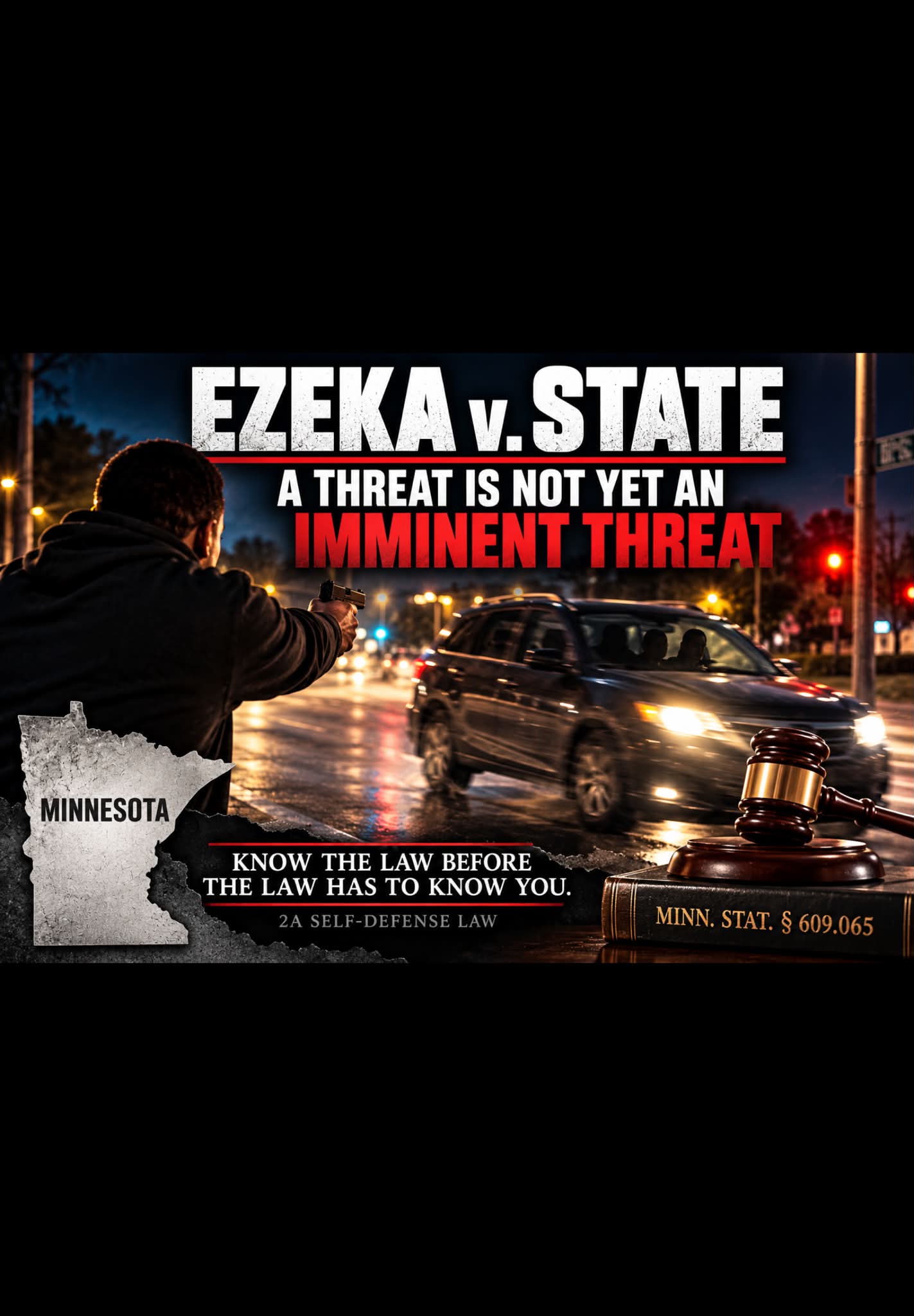
EZEKA v. STATE: A THREAT IS NOT YET AN IMMINENT THREAT
September 30, 2026 · 3 min read
Minnesota Case Analysis and Use-of-Force Law
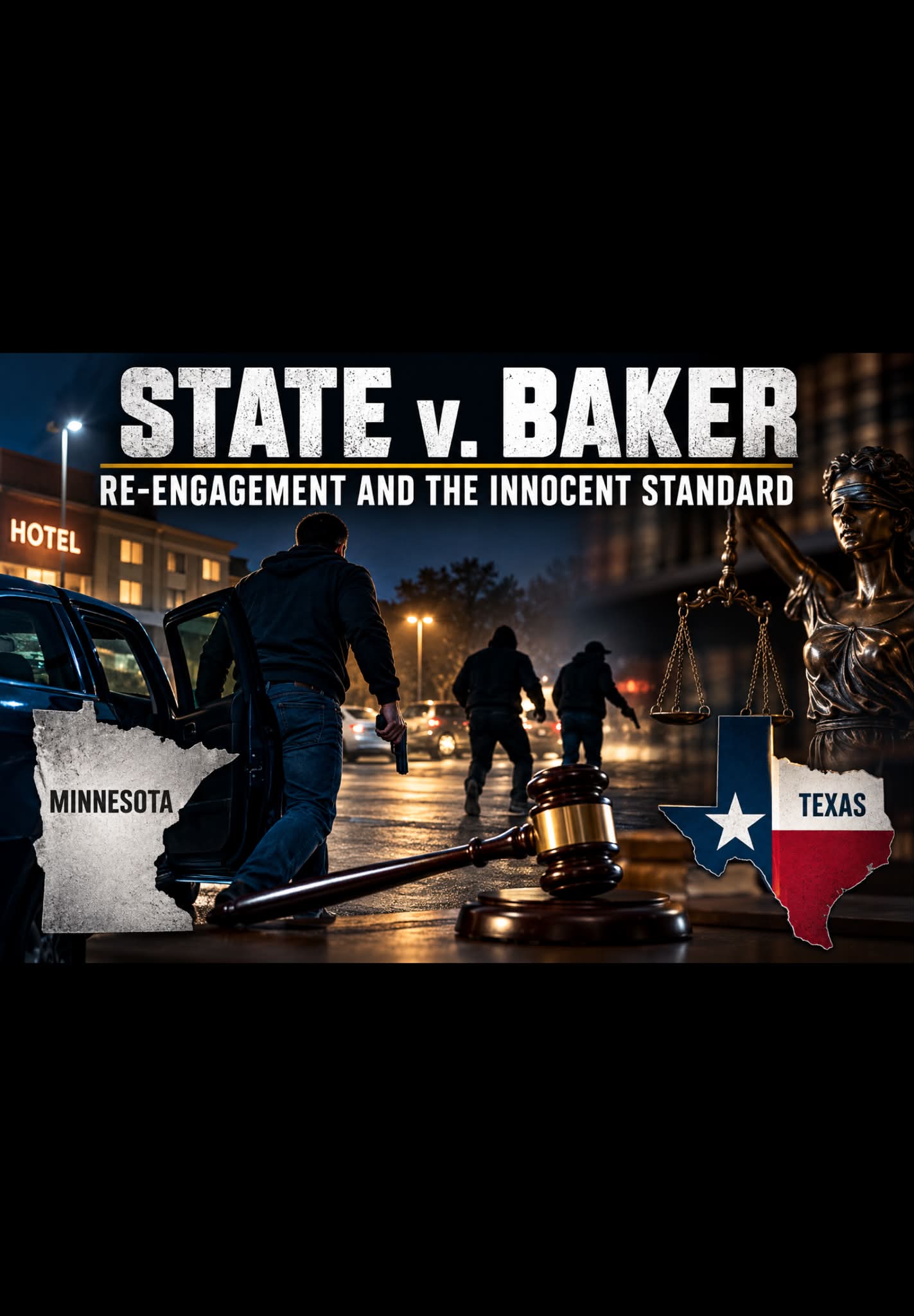
STATE v. BAKER: RE-ENGAGEMENT AND THE INNOCENT STANDARD
September 29, 2026 · 7 min read