
Forced Entry, Final Outcome: What Every Gun Owner Must Know Before Pulling the Trigger
- Originally published:
- October 29, 2025
By Jeffrey S. Straub · 5 min read · Minnesota
Forced Entry, Final Outcome: What Every Gun Owner Must Know Before Pulling the Trigger
Did you hear about the guy in Columbia, South Carolina, who kicked in a door at 10:30 one night and ended up dead? Deputies said he forced his way into an apartment, got shot, died at the hospital, and the case was closed as a “justifiable homicide” . That wasn’t a mercy, and it wasn’t luck. It was self‑defense law doing exactly what it’s supposed to do when someone violently busts through your door.
Now, before you start thinking this means you can shoot anybody who walks into your place, let’s pump the brakes. Castle doctrine is not a golden ticket to a free “body count.” It’s more like a trip to Baskin Robbins—there are 50 flavors and you better read the label before you order. In many states, the law presumes you’re in reasonable fear if someone unlawfully and forcibly enters . But in places like California, that presumption only kicks in if you actually knew someone was forcing their way in . Translation: no presumption if you wake up and find Uncle Frank standing in your kitchen because you left the door unlocked.
One more thing: screaming “castle doctrine!” doesn’t magically erase your burden. No matter how your state flavors its ice cream, you’re always being measured by five pillars—innocence, imminence, proportionality, avoidance, and reasonableness. If you can’t articulate how you meet each pillar, don’t expect the law to do it for you. In the South Carolina shooting, those pillars were practically gift-wrapped: the defender didn’t start the fight, the break‑in made the threat immediate, deadly force was proportional to a violent home invasion, there was no duty to retreat, and the law presumed he had a reasonable fear . That’s why the deputies packed up and went home.
Feel like the law still expects you to be Superman? Look back to Brown v. United States (1921). Justice Holmes famously said “detached reflection cannot be demanded in the presence of an uplifted knife” . In plain English: if someone is trying to kill you, the law doesn’t require you to stop, weigh your options, and debate whether you should jump out a window. The Brown decision wiped out the “duty to retreat” when you’re facing an immediate deadly threat. But don’t confuse that with a presumption. Brown tells you that you don’t have to run; it doesn’t gift‑wrap your reasonableness for the jury. You still have to show the threat was real and imminent .
Now let’s talk about the other Brown—the Arizona case from 2025. John Logan Brown came home, found an unwelcome guest, and locked himself in his bedroom. The guest and Brown’s roommate tried to break in, and Brown swung a microphone stand to stop them. The Arizona Supreme Court said a locked bedroom counts as a “residential structure,” meaning Brown didn’t have to retreat any further. Even though Brown testified he didn’t feel threatened, the law presumed the intruder posed an imminent threat . So yes, Arizona’s self‑defense laws are robust enough to cover your locked bedroom. But note the nuance: the court hinged its ruling on the forcible entry into a private space, not on Brown’s feelings. Had Brown walked out of his room to throw down in the living room, the presumption would have evaporated and he’d have been judged on the normal Five Pillars.
And let’s not forget Minnesota’s take. In most places, using deadly force requires you to show you feared death or great bodily harm. Minnesota, however, treats a felony intrusion into your home as inherently dangerous. The Minnesota Supreme Court said fear of death or great bodily harm “is not an element of a ‘defense of dwelling’ claim” . Jury instructions requiring fear in that context were declared wrong . In other words, if someone is committing a felony in your home, Minnesota presumes proportionality for you. That’s a very different flavor from states like California .
See how easy it is to fall into a legal rabbit hole? Castle doctrine is powerful, but it isn’t a cheat code. It’s a patchwork of laws that hinge on tiny facts: Was the door locked? Were you already home? Did the intruder force their way in? Were they invited? Think of it like this: The doorframe is your legal boundary. Kick it down and you risk getting shot with the law on the defender’s side . But step inside with permission and start a fight, and you’re suddenly in Brown‑v‑United‑States territory—no duty to retreat, but no automatic presumption, either . Defending against a felony in Minnesota? You don’t have to prove fear . Defending your locked bedroom in Arizona? The law presumes the intruder is a deadly threat . Defending a home in California? You must know there was a forcible entry . All 50 states protect your “castle,” but they don’t all hand you the same tool kit.
So before you hang your hat on your favorite flavor of castle doctrine, remember the basics. Know the Five Pillars. Know your state’s rules. Practice articulating what happened using the pillars, because prosecutors only need to knock out one to dismantle your defense. Castle doctrine is like getting a head start in a race—you still have to run the other laps. Skip that, and your “castle” won’t save you from a conviction.
Sponsored by 2A Self‑Defense Law and Jeffrey Straub
⸻
Knowledge Check
1. What triggers the presumption of reasonable fear in South Carolina’s Protection of Persons and Property Act?
A) Any argument inside the home
ð A lawful guest refusing to leave
C) An unlawful and forcible entry into the dwelling 
2. How does Minnesota’s defense‑of‑dwelling law differ from typical self‑defense rules?
A) It requires proof of fear of death or great bodily harm
ð It allows deadly force to stop a felony in the home without proving fear of death or great bodily harm 
C) It applies only to business premises
3. What did the Arizona Supreme Court decide in John Logan Brown’s case?
A) A locked bedroom does not count as a residence
ð A locked bedroom is part of a residence, and a forcibly entering guest is presumed to pose an imminent threat 
C) The Castle Doctrine does not apply to multi‑unit dwellings
⸻
#CastleDoctrine
#ThresholdMatters
#BeyondAReasonableDoubt
#KickInAFrontDoorCatchAVerdict
#SelfDefenseLaw
#2ASelfDefenseLaw
#FiftyFlavorsOfIceCream
#TheStateStillHasToProveIt
InnocenceImminenceProportionalityAvoidanceReasonablenessMinnesota Case Analysis and Use-of-Force Law
Related articles
Minnesota Case Analysis and Use-of-Force Law
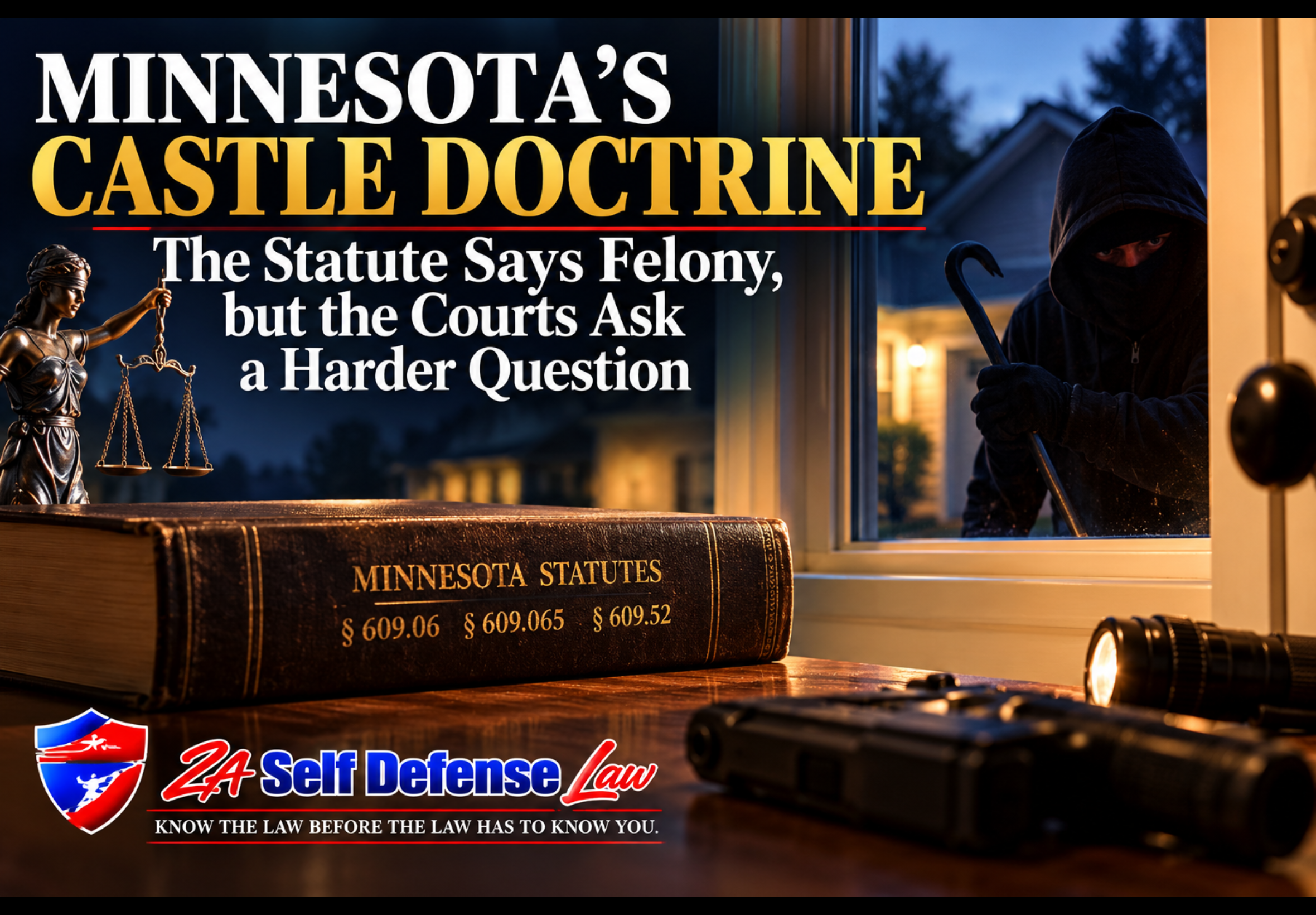
Minnesota's Castle Doctrine: The Statute Says Felony, but the Courts Ask a Harder Question
Minnesota law permits deadly force to prevent certain felonies in the home, but that does not make every felony a license to kill. Learn how the courts interpret necessity, reasonableness, retreat, and the rights of co-residents.
October 20, 2026 · 9 min read
Minnesota Case Analysis and Use-of-Force Law
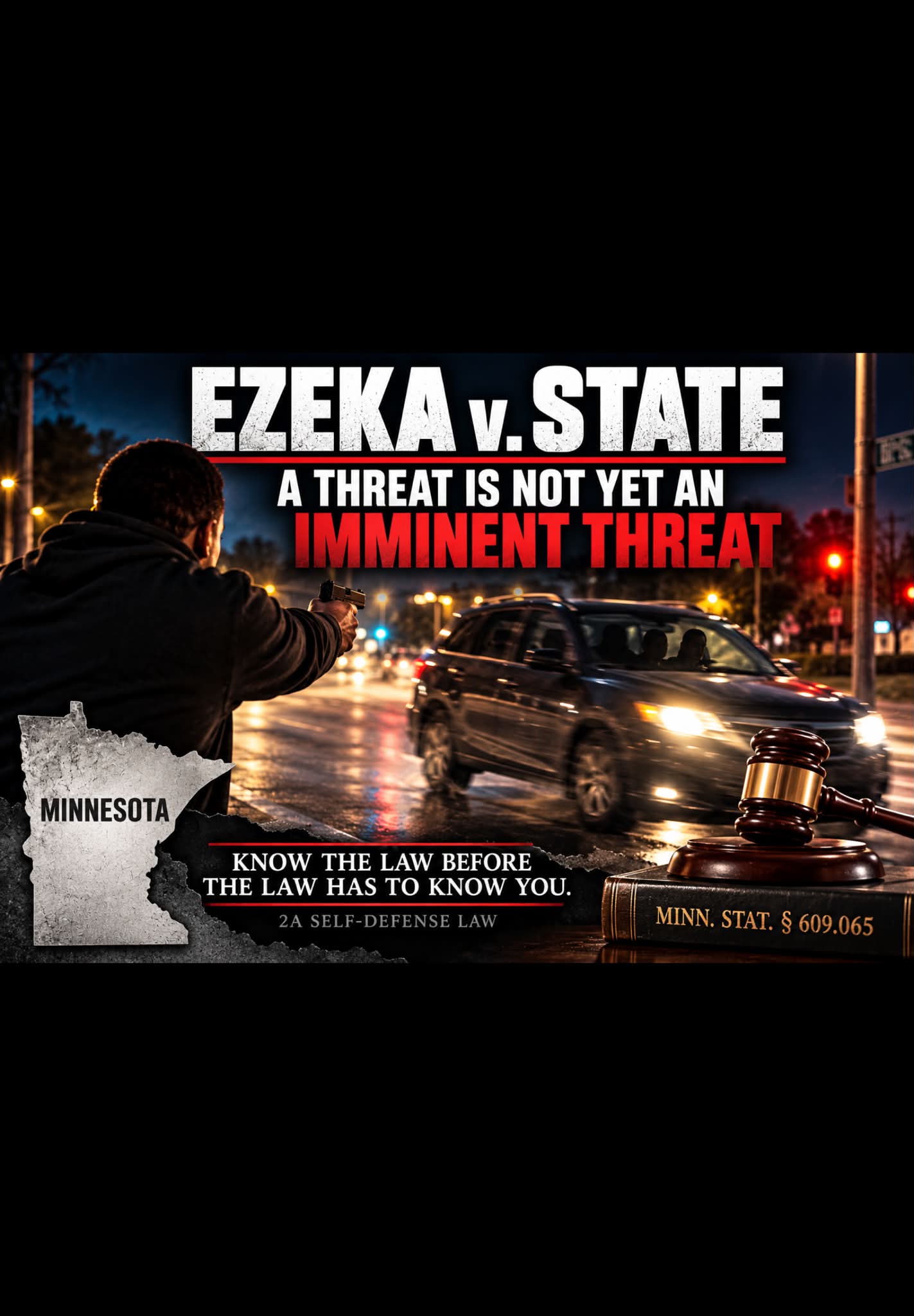
EZEKA v. STATE: A THREAT IS NOT YET AN IMMINENT THREAT
September 30, 2026 · 3 min read
Minnesota Case Analysis and Use-of-Force Law
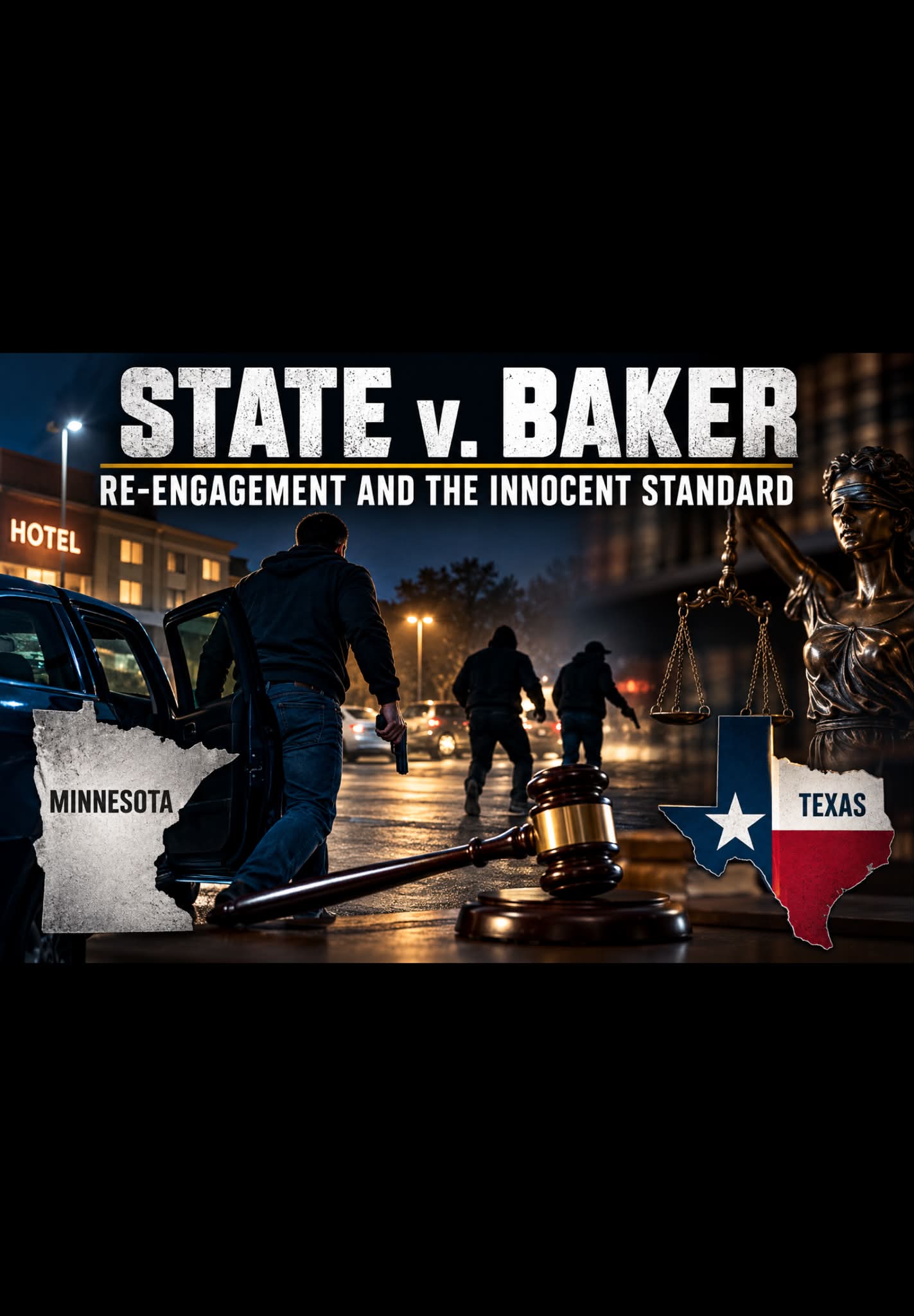
STATE v. BAKER: RE-ENGAGEMENT AND THE INNOCENT STANDARD
September 29, 2026 · 7 min read