Cross-Examination Myth #1: “You can’t get convicted just for having a lighter trigger.”
- Originally published:
- May 9, 2025
By Jeffrey S. Straub · 2 min read
Cross-Examination Myth #1: “You can’t get convicted just for having a lighter trigger.”
[Let’s put that myth on the stand and cross-examine it.]
Q: So, you changed your trigger to a lighter pull weight—why?
A: “Better performance. Smoother shot. I shoot cleaner groups.”
Q: Right. But did you document that? Train on it? Notify your use-of-force expert that you altered the factory setup?
A: “Why would I? It’s not illegal.”
Q: No one said it was illegal. I asked if it could get you convicted. Do you understand the difference between illegal and incriminating?
A: “Well… I just wanted better performance.”
Q: So when you shot that guy, was it intentional—or an accident?
A: “It was intentional.”
Q: Are you sure? Because the prosecutor’s holding up your carry pistol like it’s a murder weapon, telling the jury that your 2.5-lb trigger proves you made your gun more dangerous. That you created a setup prone to a misfire. That you went looking for an edge, not safety.
A: “But it didn’t misfire. I meant to shoot.”
Q: Then why did you say in the police interview, “It just went off”?
A: “I didn’t mean—”
Q: Stop. Right there.
If you didn’t mean to shoot, then you didn’t act in self-defense. Because self-defense is not an accident. It’s an intentional act taken to stop a threat.
No intent = no justification = no legal cover.
⸻
Here’s what this whole mess comes down to:
You can’t say “it was an accident” and claim self-defense in the same breath.
That’s like saying, “I meant to swim, but I fell into the pool.”
If it was an accident, you’re not justified. You’re on trial.
That light trigger? It may have felt smooth at the range. But now it’s a courtroom exhibit.
And that phrase—“it just went off”—just destroyed your defense.
And if that weren’t bad enough?
We’ve heard actual expert testimony in courtrooms where use-of-force or firearms experts say things like:
“Why would someone want to change their trigger? Because it makes it easier and quicker to shoot people.”
Now imagine that sentence echoing through a jury box.
⸻
Verdict:
No, a lighter trigger won’t automatically get you convicted.
But yes, it can absolutely help a prosecutor paint you as careless, reckless, or unreasonable—especially if you said the wrong thing under pressure, or failed to explain your modifications ahead of time.
The jury doesn’t just hear the facts.
They watch the story.
And that story gets told with every part of your setup—including your trigger.
Courtroom Consequences and Legal Misconceptions
Related articles
Courtroom Consequences and Legal Misconceptions
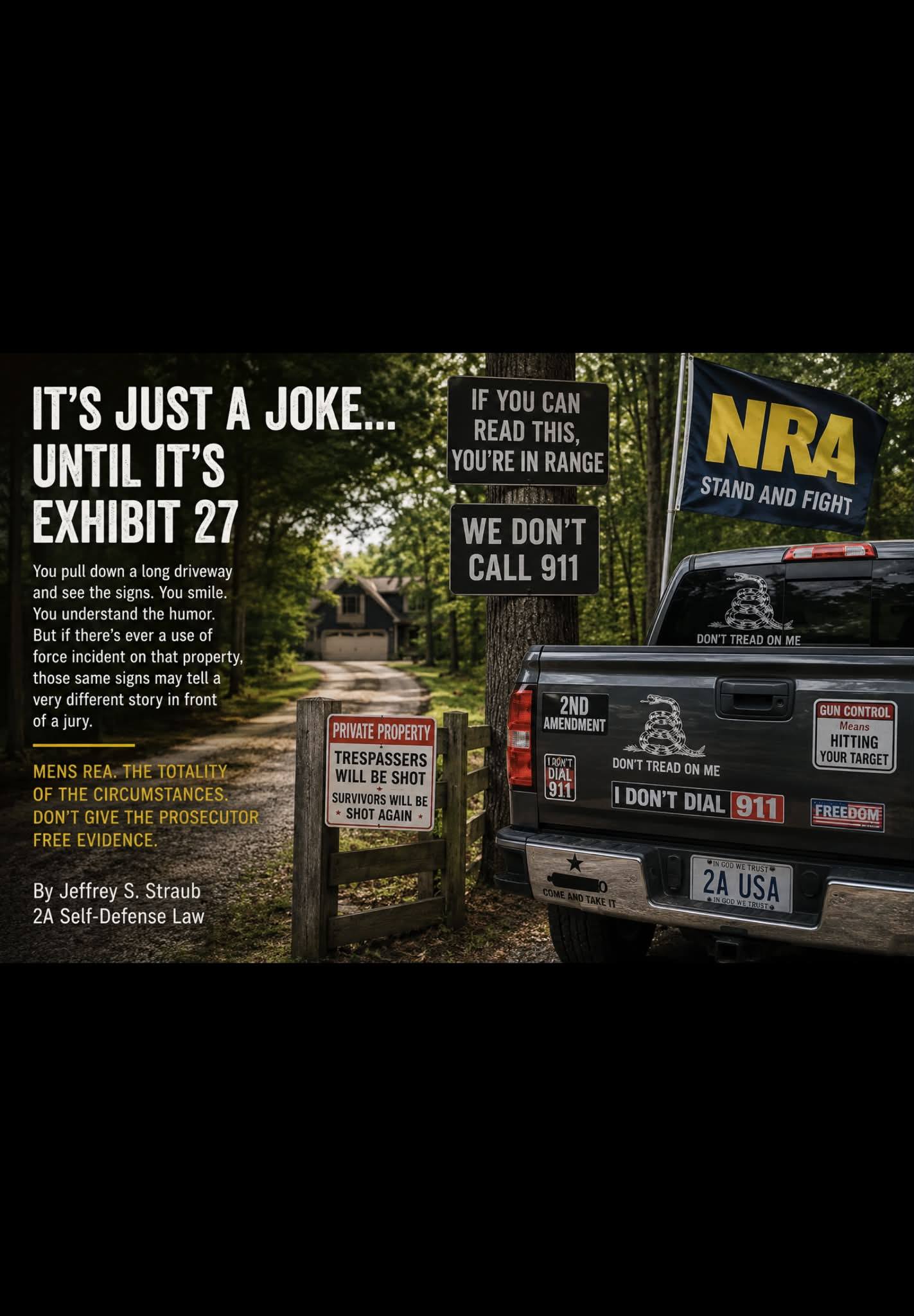
“If You Can Read This, You’re in Range”: What That Sign Really Means
August 3, 2026 · 5 min read
Courtroom Consequences and Legal Misconceptions
Why I Chose Not to Cover the Karmelo Anthony Case
July 30, 2026 · 2 min read
Courtroom Consequences and Legal Misconceptions
Fact-Checking the Akeem Rivers Case Claims
August 26, 2025 · 15 min read