“If You Can Read This, You’re in Range”: What That Sign Really Means
- Originally published:
- August 3, 2026
By Jeffrey S. Straub · 5 min read · Minnesota
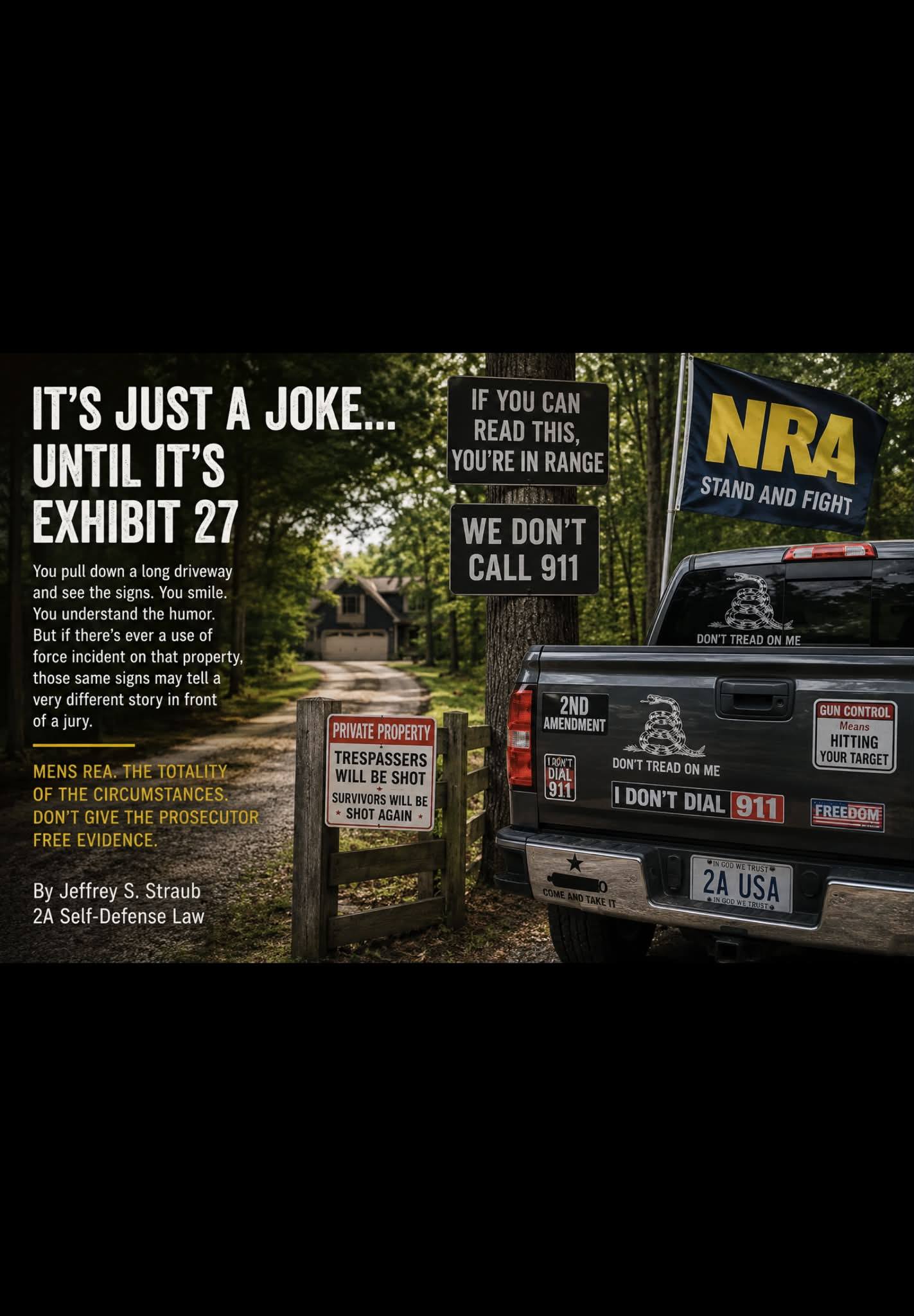
The other day I was driving down a long rural driveway. It was one of those driveways where you’ve already committed to going all the way to the house because turning around halfway would almost be more awkward than just continuing. As I was making my way toward the home, something caught my eye.
Mounted high on a pole was a sign that read:
“If you can read this, you’re in range.”
I smiled.
I knew exactly who the sign was intended for. It was dark humor. Most people in the firearms community would probably chuckle when they saw it. Then another thought crossed my mind.
In range of what?
I’m an invited guest. I’m supposed to be here. What if I had been the UPS driver? The Amazon delivery driver? A utility worker? A neighbor stopping because someone looked like they needed help? Maybe a deputy responding to a welfare check? The sign doesn’t distinguish between criminals and innocent visitors. It simply tells everyone who enters the property that they’re already “in range.”
As I continued toward the garage, I noticed another sign.
“We don’t call 911.”
Again, I understood the humor. It was meant to communicate self-reliance, not bloodlust. Most gun owners understand exactly what it’s trying to say.
Unfortunately, prosecutors don’t have to interpret it the way you intended.
As I pulled up, my self-defense instructor brain started doing what it always does. I wasn’t thinking about the signs anymore. I was thinking about what a prosecutor would say if there had ever been a legitimate self-defense shooting on that property.
I could almost hear the opening of the closing argument.
“Ladies and gentlemen of the jury, long before this shooting ever occurred, the defendant proudly displayed signs telling everyone who came onto his property that if they could read the sign, they were already in range, and that he didn’t call 911.”
Now, every time I discuss something like this, someone inevitably responds with, “Show me the court case where a bumper sticker convicted somebody.”
That’s the wrong question because that’s not how criminal trials work.
No one is claiming that a bumper sticker, a Facebook meme, a funny sign, or a sarcastic T-shirt is going to convict you by itself. Criminal cases are built on the totality of the circumstances. The prosecutor’s job is to gather every piece of evidence that helps explain your actions, your judgment, and your state of mind. In criminal law, we refer to that mental state as mens rea. If your intent becomes an issue, the prosecutor isn’t going to ignore things you’ve publicly displayed. They’re going to use every piece of evidence they believe helps tell their story.
We’ve already seen this happen.
Several years ago, in a Rochester, Minnesota self-defense case involving the shooting of a teenage boy, investigators included the shooter’s bumper sticker, “Gun Control Means Hitting Your Target,” in the criminal complaint. That bumper sticker didn’t determine whether the shooting was legally justified, but investigators obviously thought it was relevant enough to put into the official charging document.
Another example came out of Arizona when a police officer used his personally owned AR-15 during a fatal shooting. The rifle carried an offensive inscription that quickly became part of the investigation and the public discussion surrounding the case. Whether it ultimately changed the verdict really misses the point. It became something that attorneys, investigators, and the media all spent time talking about instead of focusing exclusively on whether the shooting itself was justified.
That’s exactly how these things work.
Every individual piece of evidence may be relatively insignificant standing by itself. Put enough of those pieces together, however, and they begin to tell a story. Whether that story is accurate is almost secondary. The prosecutor’s job is to persuade the jury that the story fits the evidence.
Think about some of the sayings we see every day.
“If you can read this, you’re in range.”
“We don’t call 911.”
“Gun Control Means Hitting Your Target.”
“Trespassers will be shot. Survivors will be shot again.”
“The louder you scream, the faster I reload.”
“My security system is chambered in .45.”
“Come on in… I need the practice.”
“Smile… wait for the flash.”
Most gun owners recognize these as jokes, sarcasm, or political commentary. The problem is that your jury may not consist of people who spend their weekends at the range. They may have little or no exposure to firearm culture. They only know what they’re seeing projected on a courtroom screen while the prosecutor argues that these statements reveal something about your character.
None of those statements prove a crime. None of them automatically destroy a claim of self-defense. But every one of them gives a prosecutor another opportunity to argue that you weren’t simply prepared to defend yourself, but that you were eager for the opportunity.
Whether that’s true is almost beside the point.
A prosecutor’s job is to persuade the jury. Your defense attorney’s job is to dismantle that narrative. Every bumper sticker, Facebook post, meme, T-shirt, yard sign, rifle engraving, or sarcastic comment becomes one more exhibit your attorney has to explain away. That’s time, money, and credibility spent fighting evidence that never needed to exist.
There’s another side to this that doesn’t get discussed very often.
When you fly an NRA flag, display a Gadsden flag, or cover your truck with firearm decals, you may simply be expressing your support for the Second Amendment. That’s certainly your right.
A burglar, however, may interpret those same displays very differently.
Instead of seeing patriotism, he may think, “I bet there are several firearms inside that house.”
Instead of seeing a constitutional statement, he may think, “That truck probably has a handgun inside.”
In other words, you may have unintentionally advertised exactly what a thief is looking for.
None of this means you should hide your beliefs or apologize for exercising your constitutional rights. It simply means you should think strategically. As someone who teaches self-defense law, my goal isn’t to help people win arguments on the internet. My goal is to help good people stay out of court, and if they ever do find themselves there, to make sure they haven’t handed the prosecution free evidence before the trial even begins.
As I often tell my students, don’t give the prosecutor free evidence.
If a joke, a slogan, or a sign has no real tactical advantage beyond getting a laugh from your friends, yet could someday become Exhibit 27 in your homicide trial, it’s worth asking whether it’s accomplishing what you think it is.
The goal of carrying a firearm isn’t to convince the world you’re willing to use it. The goal is to make sure that if you’re ever forced to defend yourself, every reasonable person looking at your life, your words, and your actions comes away with the same conclusion:
You hoped that day would never come.
Courtroom Consequences and Legal Misconceptions
Related articles
Courtroom Consequences and Legal Misconceptions
Why I Chose Not to Cover the Karmelo Anthony Case
July 30, 2026 · 2 min read
Courtroom Consequences and Legal Misconceptions
Fact-Checking the Akeem Rivers Case Claims
August 26, 2025 · 15 min read
Courtroom Consequences and Legal Misconceptions
The Akeem Rivers Case: When Ignoring Your Lawyer Isn’t Just Dumb, It’s Fatal
July 8, 2025 · 4 min read