The Five Pillars of Self-Defense: Imminence
- Originally published:
- January 6, 2026
By Jeffrey S. Straub · 3 min read · Minnesota
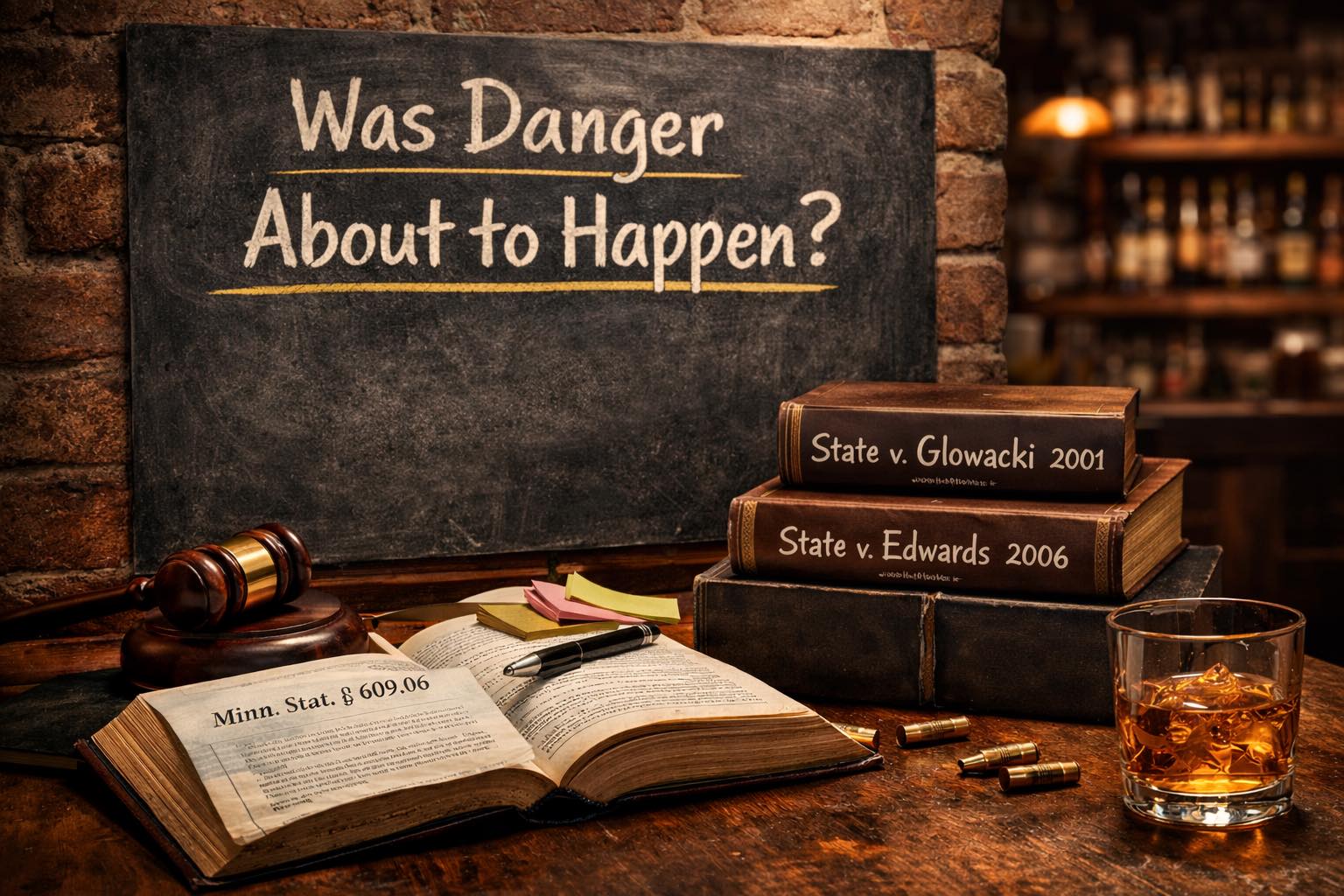
If Innocence is about who lit the fuse, Imminence is about whether the bomb was actually about to go off or whether you decided it might go off and acted on that. And that distinction matters way more in Minnesota than people expect. A lot of self-defense conversations start and end with fear. I was scared. I thought something bad was coming. And sure, fear is human. Nobody disputes that. But Minnesota law doesn’t treat fear as the deciding factor. It treats timing as the deciding factor.
When you read Minn. Stat. § 609.065 closely, you notice it never says deadly force is justified because a situation feels dangerous. It says deadly force is justified only when it’s necessary to prevent an offense you reasonably believe exposes you to death or great bodily harm. That word “exposes” isn’t abstract. It’s immediate. It’s right now.
That’s where imminence comes from. It’s Minnesota’s way of saying, we’re not going to play the “what might have happened” game. Glowacki is the case that really locks that idea in place. When you read State v. Glowacki, what the court is doing isn’t philosophical, it’s practical. The court draws a hard line between fear of future harm and a threat that’s actually unfolding. The message is pretty clear: you don’t get to use deadly force to stop something that hasn’t arrived yet.
Glowacki doesn’t say fear is irrelevant. It says fear has to line up with something concrete and immediate. If the danger isn’t pressing in right now, deadly force stops being “necessary” under the statute.
Then Edwards comes along and tightens the focus even more. State v. Edwards basically says, “Freeze the frame.” Imminence gets judged at the exact moment force is used, not based on what happened earlier, not based on what the defendant later explains, and not based on how the story feels when it’s told in hindsight.
That’s why testimony gets tricky fast. When someone says, “I thought he was going to…” Minnesota courts hear speculation, not imminence. The law is asking whether a reasonable person in that spot would have believed harm was about to happen, not eventually, not possibly, but about to.
And that’s also why jury instructions matter so much more than people realize. Jurors aren’t told to rely on gut instinct or common sense alone. They’re given written instructions, CRIMJIG 7.05 and 7.06, that spell this out in very plain language. The defendant must have reasonably believed bodily harm or death was about to be inflicted.
Those words aren’t flexible. Jurors are required to use them. So when jurors go back and replay the evidence, they’re not asking whether the situation was tense. They’re asking things like: what was the other person doing at that exact moment? Were they advancing or backing off? Was there a pause? Was there a break where things stopped moving forward?
Because that pause matters. Even a short one. This is where a lot of self-defense claims quietly collapse. Not because the situation was harmless, but because the danger changed. It peaked, stalled, or shifted, and then force happened anyway. Minnesota courts are very comfortable saying that once the threat is no longer immediate, deadly force stops being justified, even if the person is still terrified.
That’s the part that feels unfair to people. Fear doesn’t turn off instantly. Adrenaline lingers. But the law doesn’t grade emotional residue. It grades necessity at the moment force was used.
Minnesota doesn’t reward anticipation. It doesn’t reward getting ahead of a bad outcome. It rewards necessity and necessity only exists when harm is unavoidable and happening now.
That’s what imminence really is in Minnesota. Not emotion. Not instinct. Just timing.
ImminenceInnocenceFive Pillars of Self-Defense
Part of the Five Pillars series
This article belongs to the Five Pillars of Self-Defense educational series.
Pillar Two: Imminence — permanent educational page